The wooden toy villages of the world and the story they share
Germany, Japan, Russia, India. Traditions that grew up unaware of each other emerged from the same three conditions and declined for the same reason.
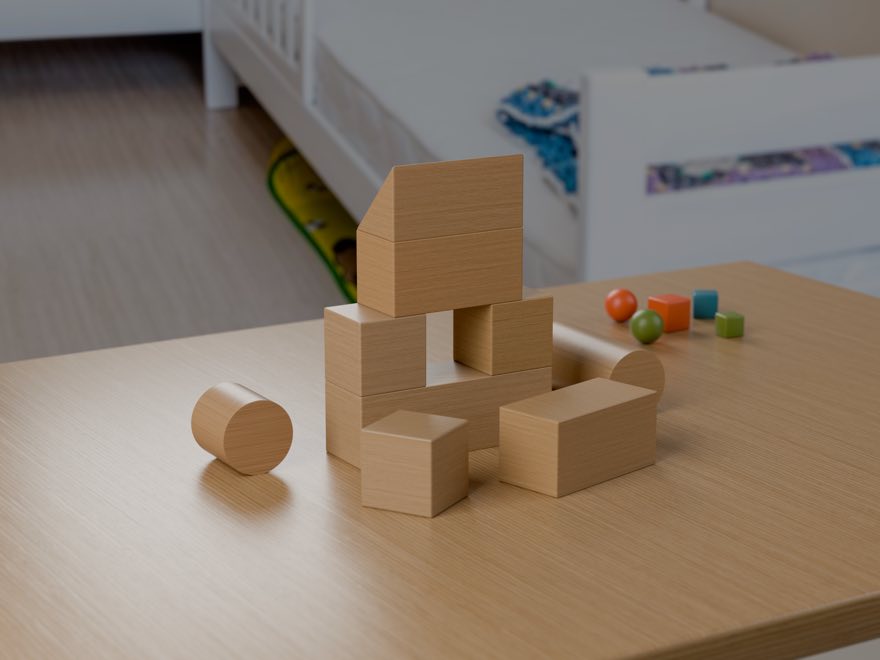
Almost every wooden toy centre in the world emerged where three conditions met: abundant cheap softwood, a workforce idle outside farming or mining season, and a mechanism to carry goods to distant markets. The ones still standing today all hold some form of origin protection.
When we started the workshop we went looking for who else had done this. The pattern that came back was tidier than expected: traditions that grew up unaware of each other solved almost the same equation.
The shared formula
Three conditions: abundant cheap softwood, a workforce idle outside the farming or mining season, and a mechanism to carry goods to distant markets. A pilgrimage route, spa tourism, a trade fair or a merchant middleman.
The collapse of tin mining in the Erzgebirge, turners left without orders through the Japanese winter, the long nights of Dalarna, families arriving in Eyüp for circumcision ceremonies. Local answers to the same question.
Germany: the Erzgebirge and Reifendrehen
Tin mining declined through the 18th century and unemployed miners turned to wood. They developed a technique that exists nowhere else in the world: Reifendrehen, ring turning.
It works like this. A wooden ring between 30 and 50 centimetres across is turned on a lathe. The maker carves the silhouette of an animal’s body into the inner profile of that ring. Every thin slice cut from the ring then comes out as a rough animal figure. One ring yields dozens of identical figures.
The region employs around 2,000 people today with roughly 50 million euros in turnover. In March 2025 the craft entered Germany’s national inventory of intangible cultural heritage.
A common confusion: the thing that entered the UNESCO World Heritage list in 2019 was the region’s mining landscape, not its toymaking.
Japan: kokeshi and travelling turners
Kokeshi dolls appeared in Tōhoku around the early 1800s. They were made by kiji-shi, travelling lathe workers who normally produced bowls and plates. When winter orders dried up they started making dolls to sell to hot spring visitors.
Eleven distinct regional schools exist and the differences are visible. In the Naruko type the head is fitted into the neck and squeaks when turned. The Tsugaru type is carved from a single piece. The Nanbu type is traditionally left unpainted.
Around 180 makers remain nationwide today, most over 60. In the Hakone marquetry tradition, only six people hold the official craftsman title.
Russia: matryoshka and a legend
The first matryoshka was made in the 1890s at Abramtsevo near Moscow. The painter Sergey Malyutin designed it and the turner Vasily Zvyozdochkin made it. It won a bronze medal at the 1900 Paris exposition.
The popular account says the idea came from a Japanese nesting figure. Tourism sources state this with great confidence, but academically it is doubtful. The workshop did receive a Japanese doll; the direct line of inspiration has never been established.
The wood is lime. Trees are felled in winter and seasoned for up to two years to prevent cracking.
India: Channapatna
Channapatna in Karnataka is known as the town of toys. The craft modernised in 1904 through an unusual move: the Maharaja of Mysore sent Bavas Miyan to Japan, the deputy head of the local industrial school, to study lacquer and toy production techniques.
The wood is *Wrightia tinctoria*, locally aale mara. A curious coincidence: Etikoppaka, India’s other toy centre, uses the same species.
It received a geographical indication in 2006. Even so it struggles against cheap imports, and many artisans have moved to textile factories.
Sweden: the Dala horse
The earliest written reference to selling wooden horses dates to 1623. The current form took shape in the 1830s when Stikå Erik Hansson applied a two colour kurbits pattern over a red ground.
At the 1939 New York World’s Fair a 2.7 metre Dala horse stood at the entrance to the Swedish pavilion, and 20,000 horses ordered from a single workshop were sold at the fair. That is where its status as a national symbol comes from.
And Eyüp
Anatolia is on this list too. Evliya Çelebi counted 100 shops and 105 toymakers in the Eyüp toy market in 1635. The difference is that unlike the others, Eyüp never recovered. The last maker stopped in 1955 and the market was demolished in 1957.
We wrote about that separately.
The shared lesson
Every tradition still standing holds some form of origin protection: a collective trademark, a geographical indication or an entry in a national inventory. Eyüp never had one.
The second pattern is in the material. Almost all of these traditions rest on a soft, pale, easily turned local wood. Spruce in the Erzgebirge, lime in Russia, mizuki in Japan, *Wrightia* in India, copal in Mexico.
The choice of wood set the speed of the craft, the speed set the price, and the price decided whether it survived. That wild copal stocks around Oaxaca are now exhausted is a reminder that what kills a craft is sometimes not the market but the raw material.
Faruk
I am building Masifico. I write these posts not as an expert but as someone who asked the same questions and wrote down what he found. If something here is wrong, tell me and I will fix it.
You might also like
Starting a toy workshop from zero
What we did on day one, what it cost, and everything we did not know yet.
Istanbul had a hundred toy shops in 1635
Toymaking in Eyüp lasted three centuries and ended in 1957 when a boulevard was built through the market. The numbers left behind are both surprising and familiar.